

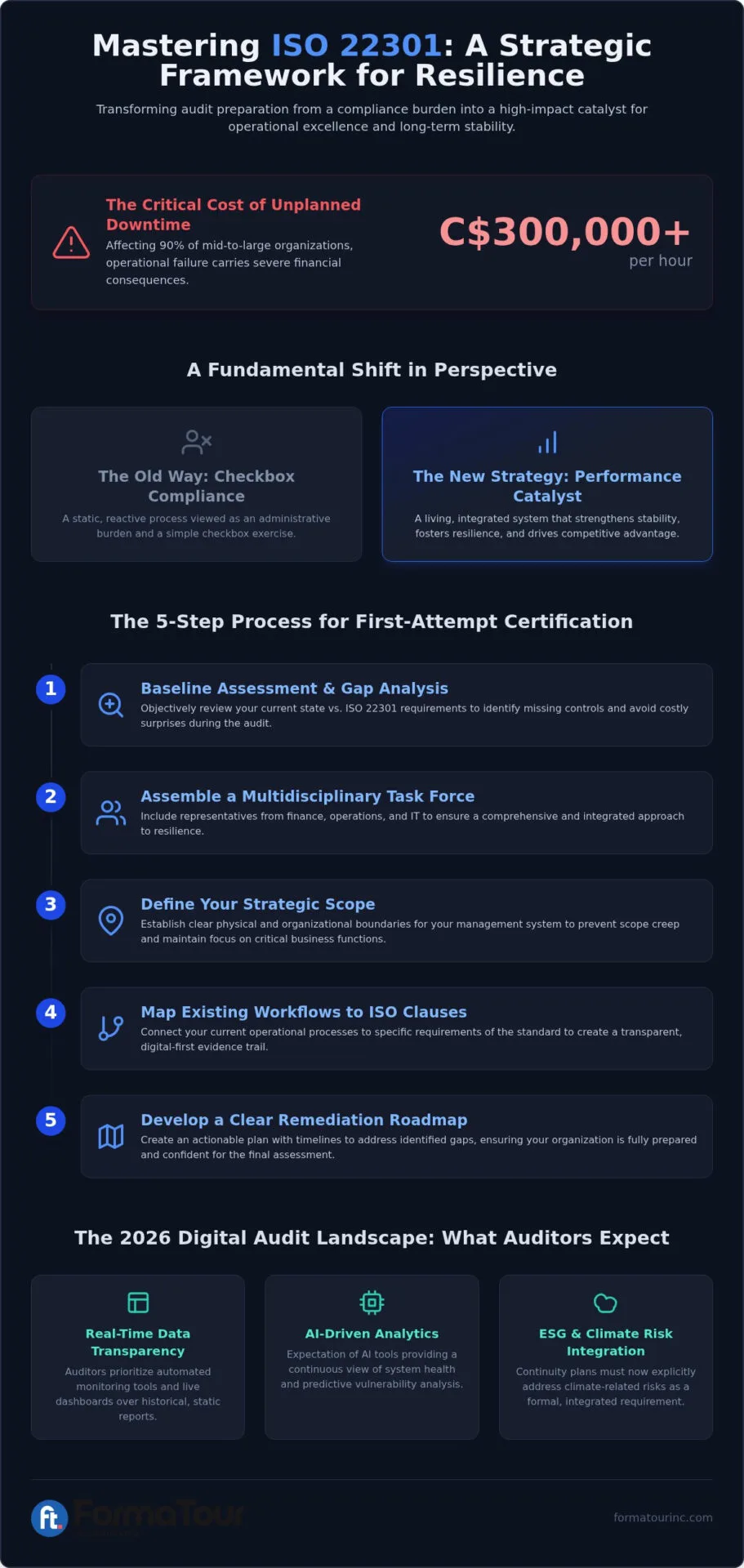
With the average cost of unplanned downtime exceeding C$300,000 per hour for 90% of mid-to-large organizations, the financial stakes of operational failure have reached a critical threshold. You likely recognize that resilience is no longer a secondary IT concern but a primary pillar of executive governance. Yet, the prospect of rigorous ISO 22301 audit preparation often triggers valid fears of operational paralysis and internal team exhaustion. It’s a delicate balance to navigate the intersection of meeting stringent international standards and maintaining the agility your business requires to grow.
This strategic guide promises to empower your leadership team to master these complexities by implementing a resilient, digital-first strategy that ensures compliance without disrupting operational performance. We’ll provide the strategic foresight needed to navigate 2026 requirements, including mandatory climate-related risk assessments and the convergence of cybersecurity with continuity. You’ll discover a structured framework for achieving certification on your first attempt while fostering a living culture of organizational resilience. We will preview the essential pillars for streamlining digital evidence, optimizing internal workflows, and aligning your governance with global standards like the Digital Operational Resilience Act.
Key Takeaways
- Reframe the certification process as a strategic performance catalyst that strengthens organizational stability instead of a simple checkbox exercise.
- Execute a precise five step internal process for ISO 22301 audit preparation to define your scope clearly and avoid unnecessary operational disruptions.
- Transition toward a digital-first compliance framework by leveraging integrated dashboards to maintain a real-time, transparent evidence trail for auditors.
- Utilize rigorous mock audit scenarios to simulate the registrar’s environment, allowing your team to address potential gaps with confidence before the final assessment.
- Integrate your continuity strategy with broader digital transformation goals to ensure long-term resilience and a competitive advantage in the Canadian market.
The Strategic Value of ISO 22301 Audit Preparation in 2026
The global risk landscape of 2026 has fundamentally altered the purpose of the certification process, transforming it from an administrative burden into a high-impact performance catalyst. Organizations that successfully navigate ISO 22301 audit preparation discover that the process acts as a comprehensive stress test for their entire organizational architecture. Rather than simply verifying documentation, the modern audit identifies latent vulnerabilities that could otherwise disrupt long-term stability. This shift represents a move away from static, historical record-keeping toward a ISO 22301 management system that’s fully integrated into daily operations.
Adopting a resilience-first mindset provides a significant competitive advantage, particularly for Canadian firms operating in interconnected global markets. Experts at Formatour Incorporated emphasize that checkbox compliance is now obsolete; stakeholders today demand proof of a living system that can withstand the cascading effects of modern crises. By using the preparation phase to refine internal communication and resource allocation, leadership teams can ensure their organization remains agile and responsive under pressure. This strategic foresight builds a foundation of quiet confidence that resonates with investors and partners alike.
From Compliance to Operational Excellence
The 2026 Digital Audit Landscape
Successful ISO 22301 audit preparation starts long before an external registrar arrives at your door. It begins with a cold, objective look at your current state versus the standard’s requirements. This internal gap analysis is a strategic necessity that prevents the expensive realization that your systems are insufficient during the actual certification process. Organizations that bypass this step often find themselves reacting to findings rather than leading the conversation with confidence.
Identifying Vulnerabilities and Non-Conformities
Understanding the distinction between non-conformities is essential for effective prioritization. A major non-conformity represents a total failure of a required control or the absence of a mandatory process. In contrast, a minor non-conformity is typically a localized lapse that doesn’t threaten the overall integrity of the system. You should prioritize corrective actions based on business risk, using your Business Impact Analysis as a guide. This risk based thinking allows you to allocate resources where they’ll have the greatest impact on your organizational resilience.
Aligning ISO Standards with Business Objectives
Resilience shouldn’t come at the expense of speed. High-quality ISO 22301 business continuity consulting focuses on enhancing operational agility rather than hindering it with excessive bureaucracy. You can achieve significant efficiency by integrating multiple standards, such as ISO 9001 for quality and ISO 22301 for continuity, into a single unified framework. C-suite buy-in is the final, non-negotiable element; without executive sponsorship, the resilience task force lacks the authority to drive meaningful cultural change. If you’re ready to refine your strategy, consider consulting with a strategic mentor to ensure your path to certification is seamless and value-driven.
Operationalizing Compliance: Building a Digital Evidence Trail
Modern ISO 22301 audit preparation has moved beyond the era of static physical binders. In 2026, auditors prioritize integrated compliance dashboards that offer a transparent, real-time view of your Business Continuity Management System (BCMS). This transition isn’t just about digitizing paper; it’s about building a living record that proves your resilience strategies are active and tested. As noted in this Forbes article on ISO standards, maintaining these benchmarks is especially vital for technology-driven firms where uptime is the primary currency of trust.
You can leverage existing project management tools to create a seamless evidence trail. By tagging business continuity tasks directly within your daily workflows, you generate timestamped proof of compliance without adding administrative burden. Data integrity and version control are paramount in this digital environment. Every plan update or exercise result must be traceable to a specific author and date. This ensures that the “truth” presented to the auditor is immutable and verifiable, reflecting a sophisticated approach to governance.
The Synergy of Automation and Compliance
Automation provides the highest audit value in areas prone to human error, such as Business Impact Analysis (BIA) updates. A “Digital-First” auditor expects to see automated triggers that prompt reviews when operational changes occur, rather than waiting for an annual manual check. This proactive stance reduces the risk of working with obsolete data during a crisis.
Use this checklist for digital record-keeping readiness:
- Centralized document repository with role-based access controls
- Automated alerts for expiring recovery plans and training certifications
- Integrated logs from disaster recovery testing and tabletop exercises
- Verified off-site backups for all compliance and operational data
Training and Empowering the Workforce
Technology alone won’t secure your certification. You must foster “audit literacy” across all organizational levels. Preparing staff for auditor interviews involves demystifying the process to reduce anxiety; they should feel empowered to explain how their specific roles contribute to the broader resilience goal. This internal expertise often serves as a strategic stepping stone for other high-stakes projects, such as ISO 27001 implementation services, creating a holistic culture of security and continuity that resonates with Canadian stakeholders.
The Final Countdown: Internal Audits and Mock Scenarios
The final phase of your ISO 22301 audit preparation involves shifting from implementation to rigorous verification. An internal audit is not merely a rehearsal; it’s a critical governance mechanism that provides an unbiased assessment of your Business Continuity Management System (BCMS). To be effective, this program must be conducted by individuals independent of the functions being audited, following the principles outlined in ISO 19011:2018. This objective oversight ensures that any remaining gaps are identified and remediated before they can jeopardize your certification during the external registrar’s visit.
A sophisticated mock audit takes this verification further by simulating the high pressure environment of a formal assessment. Instead of simply reviewing files, your resilience task force should conduct live interviews and observe recovery procedures in action. This approach tests your staff’s ability to articulate their roles and demonstrates that your continuity plans are functional, not just theoretical. By the time you finalize your documentation package for the Stage 1 ‘Desk Audit’, your team should possess the quiet confidence that comes from repeated, successful internal testing.
Stage 1 vs. Stage 2: Navigating the Audit Phases
Stage 1 is primarily a documentation and readiness review where the auditor evaluates whether your BCMS framework meets the standard’s structural requirements. If the auditor identifies a “finding” or a “non-conformity” during this phase, it serves as a vital early warning system. You must address these issues immediately to clear the path for Stage 2, which focuses on implementation and effectiveness verification. During Stage 2, the auditor will look for evidence that your processes are consistently applied across the organization to ensure long term stability.
Refining the Management Review Process
The management review is the final strategic milestone before certification. This meeting requires specific inputs, including internal audit results, status updates on corrective actions, and an assessment of resource adequacy. You must document management commitment clearly, as auditors view executive involvement as a primary indicator of a healthy resilience culture. Transforming audit findings into strategic performance targets ensures that your BCMS remains a tool for continuous improvement rather than a static compliance burden. If you’re looking to validate your readiness with expert precision, schedule a mock audit with our senior advisors to ensure a seamless certification journey.
Partnering for Success: The Formatour Advisory Advantage
Formatour Incorporated serves as a vital bridge between the high-level standards of global consulting and the personalized, responsive approach of a boutique advisory firm. We recognize that ISO 22301 audit preparation is not a generic exercise but a tailored strategic evolution that must respect your unique organizational culture. Our multidisciplinary expertise allows us to view your management systems through a wide lens, ensuring that your continuity efforts are reinforced by the principles of ISO 9001 quality management implementation. This integrated perspective ensures that every resilience control also contributes to a higher standard of service delivery and operational consistency.
Our advisory model goes beyond the initial certification to help you cultivate a permanent culture of excellence. We integrate a sophisticated digital transformation strategy into your compliance framework, ensuring that your recovery procedures are as modern as the technology they protect. By automating routine governance tasks, we free your internal teams to focus on core business growth rather than administrative maintenance. This approach transforms the audit from a stressful periodic event into a transparent, ongoing validation of your firm’s unwavering reliability and market position.
Boutique Agility with Big-Firm Standards
In the Canadian market, organizations require a partner that understands local regulatory nuances while maintaining a global perspective on risk. Formatour Incorporated provides this balance by offering deep technical knowledge without the bureaucratic delays often found in larger firms. Our focused advisory reduces the time-to-certification for complex organizations by streamlining the ISO 22301 audit preparation process and eliminating non-value-added activities. We also prioritize the human element of resilience through leadership training for digital transformation, equipping your executives with the foresight needed to manage change effectively.
A Roadmap to Long-Term Organizational Resilience
Secure Your Strategic Advantage with Formatour’s Advisory Services and build a foundation of resilience that supports your most ambitious business objectives.
Securing Your Organizational Legacy through Strategic Resilience
Formatour Incorporated stands as your seasoned strategic mentor, offering the multidisciplinary expertise required to bridge the gap between complex standards and practical application. Our focus on strategic transformation ensures that your resilience journey adds tangible value to your bottom line while meeting high-stakes international expectations. With boutique agility and big-firm standards, we provide the steady hand your leadership team needs to secure a successful audit outcome and a lasting legacy of stability. We’re dedicated to your success as a global citizen in the Canadian business landscape.
Contact Formatour to Prepare for Your Certification Audit and ensure your organization is ready for the challenges of tomorrow.
Frequently Asked Questions
How long does it typically take to get prepared for an ISO 22301 certification audit?
Preparation timelines typically range from six to twelve months depending on your organization’s existing resilience maturity. Small firms with established processes might achieve readiness sooner, while complex global entities often require a full year to implement the required controls and gather evidence. This period includes the initial gap analysis, Business Impact Analysis, and the mandatory internal audit. It’s essential to allow sufficient time for your team to live with the system before the external registrar arrives.
What is the difference between an internal audit and a certification audit?
An internal audit is a self-governance exercise conducted by your team or a strategic mentor to identify gaps before the official assessment. In contrast, a certification audit is performed by an accredited third-party registrar to verify that your system meets the international standard. While the internal audit focuses on improvement and readiness, the certification audit determines whether you’ll receive the official certificate. Both phases are critical components of successful ISO 22301 audit preparation.
Can we fail an ISO 22301 certification audit, and what happens if we do?
You don’t necessarily fail in a binary sense, but the auditor may identify major non-conformities that prevent immediate certification. If this occurs, your organization must implement corrective actions and undergo a follow-up assessment to prove the issues are resolved. Minor non-conformities won’t stop your certification, provided you submit an acceptable plan to address them. Working with a multidisciplinary advisor helps ensure these gaps are closed well before the final assessment begins.
How often do we need to undergo a recertification audit for business continuity?
ISO 22301 certifications operate on a three year cycle. After the initial certification, your organization will undergo annual surveillance audits to ensure the management system remains effective and up to date. At the end of the third year, a full recertification audit is required to renew the certificate for another cycle. This consistent oversight encourages a culture of continuous improvement rather than a one-time compliance effort, ensuring long-term organizational stability and growth.
What are the most common mistakes organizations make during ISO audit preparation?
One frequent error is treating the process as a purely technical IT project rather than a strategic leadership initiative. Organizations often over-complicate their documentation, creating systems that are too rigid for daily operations. Another common mistake is failing to conduct a thorough Business Impact Analysis, which results in recovery plans that don’t align with actual business priorities. Ensuring executive buy-in from the start prevents these misalignments and fosters a more resilient organizational culture across the firm.
Does ISO 22301 certification help with digital transformation goals?
ISO 22301 certification acts as a powerful catalyst for your digital transformation journey. It provides a structured framework for identifying critical digital dependencies and ensuring that new automated processes are resilient by design. By integrating continuity requirements into your technology roadmap, you reduce the risk of transformation-induced disruptions. This synergy allows your organization to innovate with confidence, knowing that your digital infrastructure is backed by internationally recognized stability standards and multidisciplinary expertise.
How do we choose the right accredited registrar for our ISO 22301 audit?
Selecting the right registrar requires verifying their accreditation through recognized bodies like the Standards Council of Canada or ANAB. You should prioritize firms with specific experience in your industry and a reputation for thorough, value-added auditing. A registrar should act as a professional evaluator that understands the Canadian market context. Choosing a partner that aligns with your organization’s scale and complexity ensures that the audit process provides meaningful insights for sustainable development.
What role does executive leadership play in the audit preparation process?
Executive leadership is responsible for defining the strategic objectives of the Business Continuity Management System and ensuring that sufficient resources are allocated for its success. Auditors specifically look for evidence of management commitment during the interview process. Leaders must foster a culture where resilience is valued across all departments, moving beyond simple compliance. Without active C-suite sponsorship, the preparation efforts often lack the authority needed to drive significant organizational change or long-term stability.
