

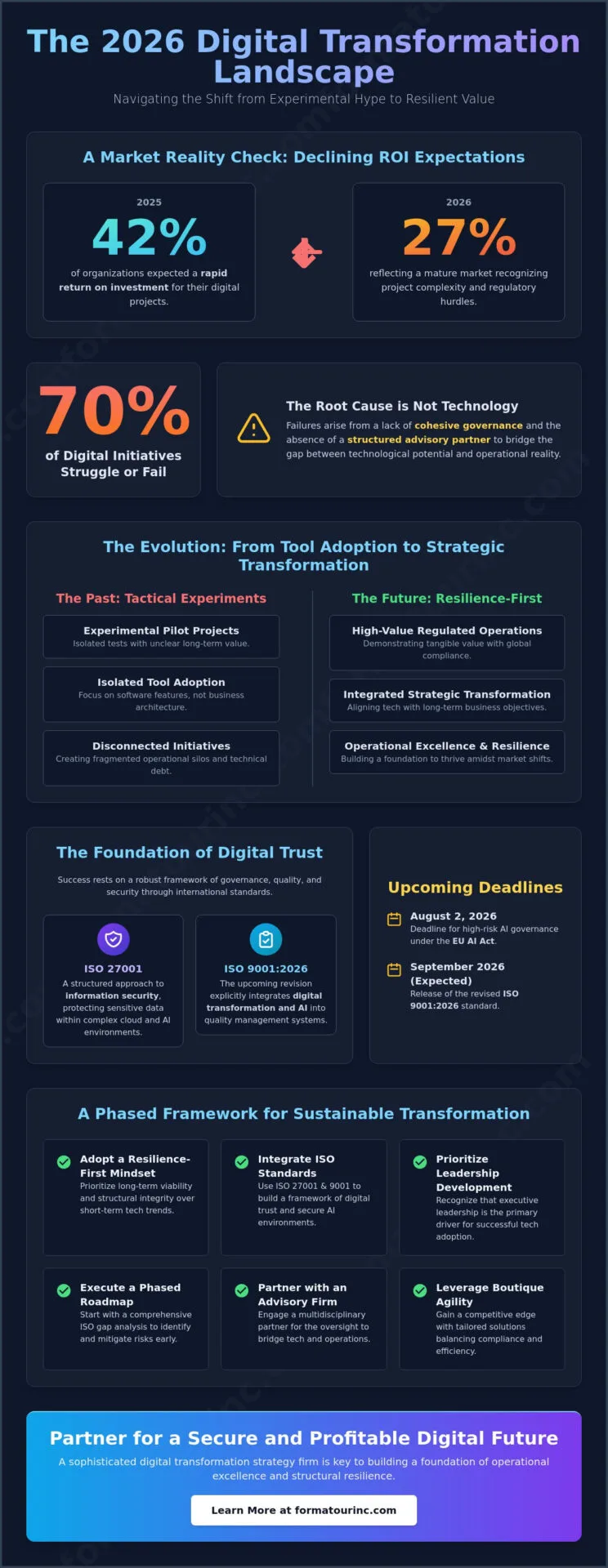
In 2025, 42% of organizations expected a rapid return on investment for their digital projects, yet as we move through 2026, that figure has plummeted to just 27%. This sharp decline reflects a maturing market that recognizes the immense complexity of integrating Generative AI with legacy frameworks while adhering to the August 2026 EU AI Act deadlines. You likely recognize that the era of experimental pilot projects is over. The focus has shifted toward demonstrating tangible value and securing global compliance in an increasingly regulated environment. Partnering with a sophisticated digital transformation strategy firm is no longer about simple tech adoption; it’s about building a foundation of operational excellence and structural resilience.
This guide provides a comprehensive roadmap for executives seeking to future-proof their organizations. You’ll discover how a strategic partner integrates the new ISO 9001:2026 standards and agentic AI to drive sustainable growth. We will examine the critical role of executive leadership development and process automation in creating a resilient structure that thrives amidst rapid technological shifts. By the end of this article, you’ll have a clear understanding of how to select a partner that ensures your digital evolution is both secure and profitable.
Key Takeaways
- Adopt a resilience-first mindset to ensure your organizational evolution survives the transition from experimental technology to high-value, regulated digital operations.
- Integrate ISO 27001 and ISO 9001 standards to build a framework of digital trust, securing your cloud and AI environments against modern threats.
- Partner with a multidisciplinary digital transformation strategy firm that prioritizes executive leadership development as the primary driver for successful tech adoption.
- Execute a phased strategic roadmap, starting with a comprehensive ISO gap analysis to identify and mitigate risks before implementing large-scale process automation.
- Leverage the agility of boutique advisory services to gain a competitive edge through tailored solutions that balance international compliance with operational efficiency.
The 2026 Digital Transformation Landscape: Beyond the Technology Hype
True Digital Transformation represents a multidisciplinary evolution of the entire organization rather than a mere upgrade of its IT infrastructure. In 2026, the global market has moved beyond the frantic adoption of isolated tools. We’ve entered an era of Resilience-First digital adoption. This shift prioritizes structural integrity and long-term viability over the superficial allure of the latest software. High-performance organizations now view technology as an integrated component of their broader business architecture. They recognize that digital progress is unsustainable without a foundation of governance and quality management.
Despite this clarity, industry data consistently shows that 70% of digital initiatives continue to struggle. These failures don’t usually stem from poor technology; they arise from a lack of cohesive governance and the absence of a structured advisory partner. A specialized digital transformation strategy firm provides the necessary oversight to bridge the gap between technological potential and operational reality. By aligning digital goals with international standards, these partners ensure that transformation is a controlled, measurable, and secure process rather than a series of disconnected experiments.
The Shift from Tool Adoption to Strategic Transformation
Investing in software is a tactical expenditure, not a strategy. True transformation requires aligning every technological choice with your organization’s long-term objectives. In the 2026 Intelligence Economy, success depends on how well data, AI agents, and human expertise interact within a unified framework. A transformation firm ensures this alignment by evaluating how new systems impact your existing ISO standards and leadership structures. They move your focus from what a tool can do to how a specific capability strengthens your market position. This strategic lens is vital as companies navigate the complexities of the August 2026 EU AI Act compliance deadlines.
The Cost of Stagnation in a Rapidly Automating Market
Delaying digital adoption creates a compounding competitive disadvantage that is difficult to overcome. As 80% of enterprises deploy generative AI applications this year, those who hesitate face mounting technical debt and fragmented operational silos. A digital transformation strategy firm helps you navigate this risk by balancing immediate performance gains with future-proof scalability. They prevent the common pitfall of implementing quick fixes that eventually require expensive re-engineering. By focusing on process optimization and business continuity, you ensure that your automation efforts lead to sustainable growth. This approach protects your operational performance while building a resilient organizational structure capable of withstanding future market shifts.
Integrating ISO Standards: The Foundation of Digital Trust and Resilience
Digital evolution without a robust framework for governance is a high-risk gamble. While many organizations focus on the immediate gains of automation, a sophisticated digital transformation strategy firm understands that long-term success rests on a foundation of digital trust. The upcoming ISO 9001:2026 revision, expected in September 2026, explicitly integrates digital transformation and AI principles into quality management systems. This shift confirms that quality is no longer just about physical outputs; it’s about the integrity of the data and the reliability of the automated processes that drive your business. A proactive ISO 9001 quality management implementation transforms this compliance requirement into a strategic advantage, refining governance and optimizing human capital across the organization.
Securing these systems is not an optional task. With the August 2, 2026 deadline for high-risk AI governance under the EU AI Act, organizations must adopt standardized security protocols. Utilizing ISO 27001 implementation services provides a structured approach to managing sensitive information within complex cloud and AI environments. By establishing these controls early, you create an environment where innovation can flourish without compromising security or compliance. This systematic approach is essential for building better digital services that resonate with stakeholders and customers alike.
ISO 27001: Securing the Digital Transformation Journey
The fear of data breaches often paralyzes executive decision-making during digital migration. An Information Security Management System (ISMS) offers more than just protection; it provides a strategic framework for secure innovation. By implementing ISO 27001, your organization moves beyond reactive security measures toward a proactive stance that identifies and mitigates risks before they manifest. Regular auditing and certification serve as a global signal of reliability, ensuring your partners and clients that their data is handled with the highest level of professional care. It’s a vital step in transforming security from a cost center into a competitive advantage.
ISO 22301 and Organisational Resilience in a Digital Age
Shifting to fully digital operations increases your reliance on uptime and system integrity. Business continuity is no longer a secondary concern but a central pillar of your digital strategy. Engaging in ISO 22301 business continuity consulting ensures that your organization can withstand digital disruptions, whether they stem from cyber threats or infrastructure failures. This resilience allows you to maintain operational performance during turbulent periods, protecting your brand’s reputation and financial stability. To explore how these standards can stabilize your growth, you might consider consulting with our advisory team to align your compliance needs with your transformation goals.
Human-Centric Automation: Bridging the Leadership Gap
Technology is only as effective as the leaders who direct it. While 71% of organizations plan to increase their spending on AI technologies throughout 2026, many overlook the “Leadership Gap” that frequently derails these investments. This gap occurs when an executive team possesses the budget for advanced tools but lacks the strategic vision to integrate them into the company’s culture. A seasoned digital transformation strategy firm recognizes that bridging this divide is the most critical step in any digital roadmap. Without a leadership team capable of navigating the nuances of agentic AI and automated workflows, even the most sophisticated systems will fail to deliver a return on investment.
Professional development is the catalyst that transforms a group of managers into a visionary leadership team. Investing in leadership training for digital transformation prepares the C-suite for the unique challenges of 2026. This education focuses on more than just technical literacy; it cultivates the ability to manage change, foster transparency, and maintain a high-performance culture during periods of rapid evolution. By prioritizing human capital, you ensure that your digital strategy is guided by a steady, expert hand.
Executive Education as a Catalyst for Change
Successful transformation requires a fundamental shift in executive mindset rather than a simple budget increase. Leaders must evolve from being overseers of static processes to being architects of dynamic, AI-enhanced ecosystems. Participating in international seminars exposes your team to global digital benchmarks and forward-thinking trends that are often missed in localized markets. This global perspective is essential for developing a vision that aligns your organizational goals with the possibilities of the modern intelligence economy. It allows you to co-develop solutions that are both practical and visionary.
Empowering Teams through IT Certifications and Training
Internal resistance is one of the primary obstacles to successful automation. When employees understand the “why” behind technological shifts, they become active participants in the process rather than passive observers. Providing clear paths for skill-building and transparency reduces anxiety and builds trust across the organization. The role of lead auditor training is particularly significant here; it empowers your staff to maintain internal standards and quality controls as processes become more complex. By building a culture of continuous improvement, your digital transformation strategy firm helps you create a resilient structure that thrives on operational excellence and sustainable development.
A Phased Framework for Sustainable Digital Transformation
Sustainable progress is never accidental. It requires a methodical, step-by-step approach that balances technological ambition with organizational readiness. A leading digital transformation strategy firm utilizes a five-step framework to guide clients from initial uncertainty toward measurable excellence: Audit, Design, Secure, Implement, and Optimise. This structure ensures that every action taken is deliberate and contributes to the overall resilience of the organization. By following this phased progression, you avoid the common pitfalls of fragmented implementation and misaligned technology investments.
Step 1: The Strategic Audit and ISO Gap Analysis
Before adding layers of technology, you must identify your current operational weaknesses. The strategic audit serves as the diagnostic phase that prevents future project bloat by ensuring every new tool addresses a verified need. Benchmarking your existing processes against international standards like ISO 9001:2026 provides a solid foundation for growth. This gap analysis reveals where your governance, data quality, or security protocols may fall short of 2026 requirements. Starting with a clear understanding of your baseline allows you to build a transformation strategy that is both realistic and robust. Understanding the full scope of ISO 9001 quality management implementation requirements at this stage ensures your audit captures every dimension of quality governance needed for sustainable digital growth.
Step 2: Designing the Transformation Roadmap
Once the audit is complete, the focus shifts to prioritizing high-impact automation opportunities. You should target “low-hanging fruit” that offers immediate operational gains while building momentum for larger initiatives. Integrating project management advisory services is essential during this phase to manage complex timelines and resource allocation. A well-designed roadmap remains flexible enough to adapt to emerging tech shifts, such as the move toward Enterprise General Intelligence (EGI), ensuring your organization stays ahead of the curve without losing sight of its core objectives.
Implementation and Measuring ROI
The implementation phase is where strategy becomes tangible action. Utilizing process automation consulting allows you to streamline workflows and reduce manual errors, directly enhancing your operational performance. However, the success of these efforts isn’t measured by “go-live” dates alone. True ROI is found in operational performance metrics, such as reduced cycle times, improved compliance rates, and enhanced data accuracy. Complementing these automation efforts with structured business process optimization services ensures that efficiency gains are sustained and aligned with your ISO governance requirements. By focusing on these outcomes, you ensure that your digital evolution delivers a clear return on investment and strengthens your market position. To begin crafting a roadmap tailored to your specific needs, contact our strategic advisory team today.
Partnering for Success: Why a Multidisciplinary Advisory Firm Matters
Choosing a partner is a decision that defines the long-term trajectory of your organizational health. While “Big 4” consulting models offer expansive resources, they often provide high-level theoretical frameworks that lack the specific operational context required for mid-market agility. In contrast, a specialized digital transformation strategy firm offers a more intimate, results-oriented partnership. This boutique approach ensures that your strategic architect is deeply embedded in your unique operational reality, rather than delivering a generic playbook that’s difficult to execute.
The true benefit of a multidisciplinary approach lies in the seamless integration of ISO standards, technological advancement, and human capital development. As established in previous sections, digital evolution is a triad of certified resilience, human-centric leadership, and targeted automation. Formatour Incorporated brings these disparate threads into a single, cohesive strategy. You don’t need to manage multiple vendors for information security, executive coaching, and tech advisory. One expert hand guides the entire process, ensuring that every technological upgrade strengthens your structural integrity.
For Canadian organizations operating on the world stage, a “Global Citizen” perspective is indispensable. You must understand international benchmarks like the EU AI Act while remaining grounded in practical, local application. This global-mindedness ensures your transformation is compliant with international standards, facilitating seamless expansion into new markets. It’s about being knowledgeable about forward-thinking trends while remaining dedicated to collaborative success. Organizations that also pursue ISO 14001 certification services alongside their digital strategy find that environmental compliance further strengthens their international market eligibility and brand integrity.
The Advantage of Boutique Agility in 2026
In 2026, speed is a competitive necessity. Boutique agility allows for faster decision-making and more personalized executive partnership. You move quickly from theoretical reports to hands-on implementation and auditing. Having a single partner for ISO compliance and digital strategy reduces friction and ensures that security isn’t an afterthought. It’s built into every leadership decision and automated workflow. This level of precision and intelligence is what sets a premium digital transformation strategy firm apart from traditional consultants.
Next Steps: Initiating Your Strategic Transformation
Before engaging an external partner, conduct a preliminary internal readiness assessment. Evaluate your current leadership’s openness to change and the maturity of your existing data governance. When interviewing potential partners, ask how they integrate ISO standards into their tech roadmaps and how they measure long-term ROI beyond the initial launch date. These questions will help you identify a partner that values thoroughness and sustainable development over hurried, superficial solutions.
To begin securing your organization’s digital future, contact Formatour Incorporated for a strategic transformation consultation. Our team is ready to help you co-develop a roadmap that ensures stability, growth, and predictable excellence in an increasingly complex global landscape.
Securing Your Competitive Advantage in the Intelligence Economy
The transition toward a fully digital organization requires more than the adoption of advanced tools; it demands a fundamental commitment to structural integrity and executive foresight. You’ve seen that the most successful transformations in 2026 are those that prioritize ISO-certified resilience and human-centric leadership. By following a phased framework that begins with a rigorous strategic audit, you ensure that every technological investment delivers a measurable return on investment. Selecting the right digital transformation strategy firm is the final, most critical step in aligning these complex elements into a unified, high-performance ecosystem.
Formatour Incorporated brings over a decade of multidisciplinary advisory experience to your organization. We combine premium ISO auditing and certification expertise with the boutique agility required to thrive in today’s rapidly shifting market. Our approach matches big-firm consulting standards with a personalized level of executive partnership that larger agencies simply can’t replicate. You don’t have to manage the complexities of global compliance and AI integration alone. Partner with Formatour for your 2026 Digital Transformation Strategy and build a foundation for sustainable, predictable growth. Your journey toward a more resilient and automated future starts with a single, strategic conversation.
Frequently Asked Questions
What does a digital transformation strategy firm actually do?
A digital transformation strategy firm serves as a strategic architect, guiding organizations through the complex integration of emerging technologies and international standards. This partnership involves conducting comprehensive audits, designing phased roadmaps, and ensuring that every technological adoption strengthens structural integrity. By aligning digital goals with long-term business objectives, these firms help leaders move beyond tactical tool adoption toward a cohesive, multidisciplinary evolution of the entire enterprise.
How does ISO 27001 relate to our digital transformation strategy?
ISO 27001 establishes the necessary Information Security Management System (ISMS) to protect sensitive data during and after digital migration. It ensures that innovation remains secure and compliant with global regulations, such as the August 2026 EU AI Act mandates. By integrating these standards into your strategy, you build a foundation of digital trust that is essential for maintaining stakeholder confidence in a highly regulated landscape.
How long does a typical digital transformation project take in 2026?
A typical transformation initiative moves through several strategic phases over 12 to 24 months, depending on the organization’s maturity. While initial process automation can deliver results within six months, only 27% of organizations now expect a rapid return on investment compared to 42% in 2025. This shift reflects a move toward more thorough, sustainable development that prioritizes long-term resilience over superficial or hurried implementations.
Why do so many digital transformation initiatives fail?
Failures often stem from a “technology-first” mindset that ignores the critical role of governance and leadership readiness. Approximately 70% of digital initiatives struggle when firms prioritize software adoption over strategic alignment and executive education. Without a structured advisory partner to bridge the gap between technological potential and operational reality, organizations often encounter fragmented silos, mounting technical debt, and significant internal resistance to change.
Can a small or mid-sized firm benefit from a transformation strategy?
Small and mid-sized organizations frequently gain the most from a structured strategy because they possess the boutique agility to implement changes rapidly. A tailored roadmap allows these firms to compete with global enterprises by optimizing their processes and achieving ISO certifications that build international trust. This strategic foresight ensures that their growth is both scalable and resilient against the rapid technological shifts expected throughout 2026.
What is the difference between digital transformation and simple process automation?
Simple process automation is a tactical step focused on digitizing specific tasks to improve immediate efficiency. Digital transformation is a holistic, multidisciplinary evolution that reshapes the entire organizational culture and business model. It integrates automation with strategic governance, executive leadership development, and international standards. This comprehensive approach creates a future-proof structure capable of long-term scalability rather than just providing a temporary fix for isolated operational bottlenecks.
How do we measure the ROI of a digital transformation strategy firm?
ROI is measured through concrete operational performance metrics rather than just “go-live” dates. Organizations should track improvements in cycle times, data accuracy, and compliance rates following the implementation of new systems. A professional digital transformation strategy firm also helps reduce technical debt and ensures the successful attainment of ISO certifications. These outcomes serve as tangible indicators of a firm’s impact on long-term organizational health and competitive market positioning.
Is executive leadership training necessary for digital success?
Executive leadership development is essential because advanced technology is only as effective as the leaders who direct its application. Training prepares the C-suite to navigate the nuances of agentic AI and foster a culture of transparency and continuous improvement. Without this human-centric focus, organizations often face a “Leadership Gap” where the workforce fails to align with automated processes, ultimately stalling the entire transformation journey.
